


Veteran-Owned & Operated

Certified Pest Control Experts

Safe & Effective
Solutions















 If you’re hearing scratching in the attic at night, finding droppings in your kitchen, or noticing chewed wiring, you likely have a rodent problem that needs professional attention. According to the CDC, rodents spread over 35 diseases to humans and can cause significant structural damage. Bugsy’s Pest Solutionsprovides complete rodent control for South Florida homes — from inspection and trapping to full exclusion and attic restoration.
Signs You Have Rodents
- Scratching, scuffling, or running sounds in the attic — especially at night
- Small black droppings on countertops, in cabinets, or along baseboards
- Chewed food packaging in the pantry or kitchen
- Greasy rub marks along walls, baseboards, or pipes
- Chewed electrical wiring — a serious fire hazard
- Nesting material (shredded insulation, paper, fabric) in the attic
- Foul odor in enclosed spaces from urine or a deceased rodent
The Roof Rat Problem in South Florida
Roof rats are the dominant rodent species in Palm Beach and Broward counties. Unlike Norway rats (which burrow), roof rats are excellent climbers — they travel along tree branches, fences, and utility lines to reach rooflines. UF IFAS Extensionresearch identifies roof rats as one of the most problematic urban pests in South Florida due to the region’s mature tree canopy and warm climate.
A single pair of roof rats can produce up to 40 offspring per year. By the time most homeowners notice a rodent problem, there’s already a significant population in the attic.
Our Complete Rodent Control Process
Step 1: Free Inspection
Our technician performs a full inspection of your home — the attic, roof perimeter, foundation, and all exterior walls — to identify entry points, active infestation areas, and rodent runways. We look for droppings, rub marks, chew damage, and nesting sites.
Step 2: Professional Trapping
We strategically place snap traps along active rodent runways throughout the attic and home. Roof rat families typically range from 5 to 10 individuals. We set enough traps to eliminate the existing population as quickly as possible. Follow-up checks are included.
Step 3: Exclusion (Rodent-Proofing)
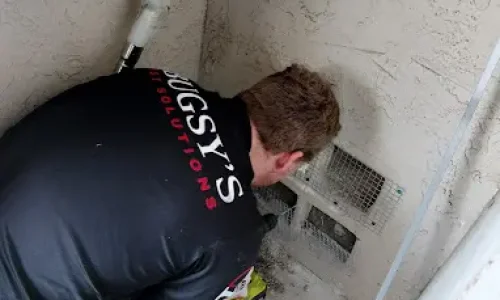
Once the existing population is eliminated, we seal every identified entry point using materials rodents can’t chew through: galvanized steel mesh, copper mesh, hardware cloth, mortar, and expanding foam backed with metal. The most common entry areas we seal include:
- AC chase where air conditioning lines enter the home
- Plumbing pipe penetrations through the roof
- Roof vents and turbine vents
- Soffit vents along the eaves
- Gable vent screens
- Garage door threshold gaps
Step 4: Exterior Bait Station Program (Optional)
After exclusion is complete, we recommend installing tamper-proof exterior bait stations around your home’s foundation perimeter. These stations reduce the outdoor rodent population — eliminating the pressure that drives rodents to seek entry in the first place. Bait is maintained on a monthly, bi-monthly, or quarterly schedule.
Attic Sanitation & Insulation Services
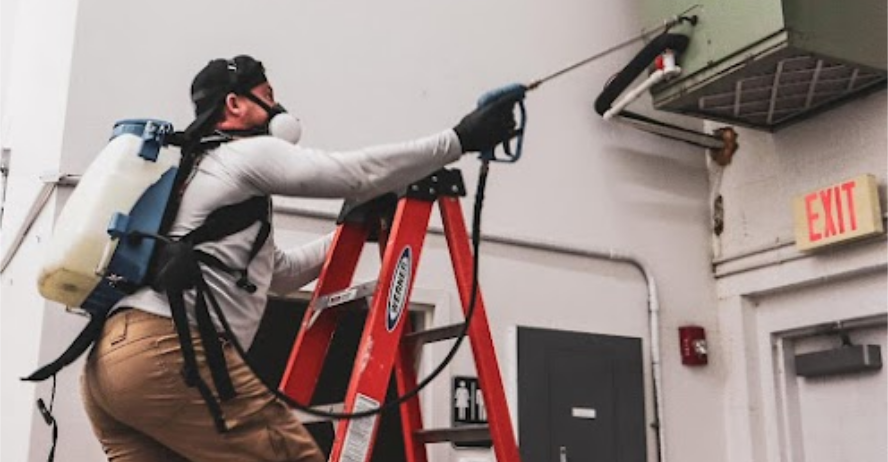
After rodents are removed, the work isn’t finished. Rodent droppings and urine in attic insulation can transmit disease and cause ongoing odor problems. Bugsy’s provides complete attic sanitationand contaminated insulation removal and replacement. We use a HEPA-rated fogging disinfectant to sanitize the attic space before installing fresh insulation — restoring your attic to a clean, healthy state.
Frequently Asked Questions
How do I know if I have roof rats or mice?
Roof rats are larger (about the size of a fist), leave larger droppings, and are almost always found in attics. Mice are smaller, leave tiny droppings, and are more commonly found in kitchen and pantry areas. Both require professional treatment.
Can rats chew through steel mesh?
No. Standard wire or plastic mesh won’t stop roof rats — they can chew through it. We use galvanized steel hardware cloth and other materials specifically rated to resist rodent gnawing.
Do I need to replace my attic insulation after a rodent infestation?
In most cases, yes. Rodent urine and feces contaminate insulation deeply, and the material loses its R-value efficiency over time. Bugsy’s provides full attic insulation removal and replacement as part of our complete rodent remediation service.
How long does rodent exclusion take?
Most residential exclusion jobs are completed in one visit. For larger homes or extensive damage, a second visit may be needed. We’ll give you an accurate timeline during the free inspection.
What if rodents come back after exclusion?
Our exclusion work is designed to be permanent. If rodents re-enter through any point we sealed, we return to address it at no additional charge within the warranty period.
Get a Free Rodent Control Estimate
Don’t wait for a pest problem to get worse. Bugsy’s Pest Solutions is ready to help. As a veteran-owned, family-operated company, we treat your home like our own. Call (561) 654-8998or request your free estimate online. We serve Palm Beach and Broward counties including Lake Worth Beach, West Palm Beach, Boca Raton, Boynton Beach, Delray Beach, Coral Springs, Pompano Beach, and surrounding areas.