“Sugar ants” is a catch‑all homeowners use for several small, sweet‑loving ant species that forage for carbohydrates and moisture inside houses. Florida’s warm, humid climate makes indoor encounters common year‑round. This guide explains which ants you’re likely to see in Florida, the main attractants that bring them indoors, and practical, science‑backed prevention and control steps you can take today. You’ll learn how food sources, honeydew from sap‑feeding pests, moisture, landscaping choices, and small structural gaps combine to create ideal conditions for colonies to forage and sometimes nest near or inside homes. We cover detection signs, seasonal patterns tied to Florida rains, and a prioritized prevention checklist on sanitation, moisture control, sealing, and insulation. We also explain the limits of DIY tactics, effective baiting approaches, and when a professional inspection makes sense. If you’d rather have a local pro handle it, Bugsy’s Pest Solutions in Lake Worth Beach is a trusted, veteran‑owned option offering free estimates for inspections and custom plans.
What Are Sugar Ants and Which Species Are Common in Florida?
“Sugar ants” isn’t a scientific term — it groups several small ant species that seek sweets and moisture. These ants forage broadly, follow pheromone trails to recruit nestmates, and often nest outdoors in soil or inside wall voids where food and humidity meet. Knowing the common species and how to spot them helps you choose the right bait and sanitation steps, which improves control results. The quick reference table below summarizes the species most often called sugar ants in Florida and notes easy ID cues and typical nesting spots so you can decide on your first action.
The table below helps you match a sighting to the likely species and the best first response.
| Species | Identification (size/color/behavior) | Typical Nesting & Key ID Tips |
|---|---|---|
| Ghost ant | Tiny (1.3–1.5 mm); translucent legs with a darker head and thorax | Trails on countertops and potted plants; nests in wall voids, under mulch, or in potted soil |
| Pavement ant | Small (2.5–3 mm); brown to black with parallel grooves on the head | Nests under pavement and along foundations; often enter indoors through foundation cracks |
| Argentine ant | Small (2–3 mm); uniformly brown; can form very large colonies | Large outdoor supercolonies that flood kitchens and form long foraging trails |
| Odorous house ant | Small (2.4–3.3 mm); dark brown; gives off a rotten‑coconut scent if crushed | Nests in moist wood or under insulation; common near AC units and bathrooms |
This table explains why a quick inspection and correct ID are the first steps before choosing baits or exclusion work. The next section gives visual ID tips for the species you’re most likely to find in Florida homes.
How to Identify Ghost Ants, Pavement Ants, and Argentine Ants in Florida Homes
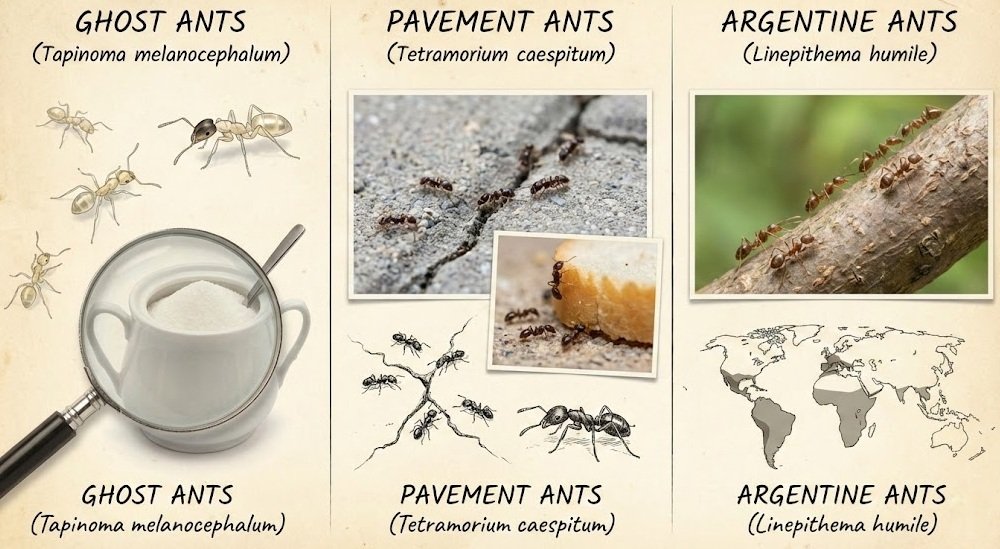
Ghost ants, pavement ants, and Argentine ants differ in color, size, and nesting habits — and those differences matter for bait choice and exclusion. Ghost ants have almost translucent legs and darker bodies and are commonly seen trailing across counters to reach sweets. Pavement ants are darker and usually enter from foundation gaps, so sealing and perimeter work help. Argentine ants operate in huge outdoor colonies and will flood interiors when food or moisture is available. Noting whether trails concentrate around sinks and potted plants versus foundation edges helps you prioritize moisture fixes, sealing, or baiting strategies that aim for the colony — not just the foragers.
These ID cues guide focused inspections of likely indoor and outdoor nest sites before you start baiting or exclusion work.
Where Do Sugar Ants Typically Nest and Forage in Florida Residences?
In Florida, sugar‑ant species commonly nest outdoors under mulch, in potted plants, or under pavement, but they’ll also exploit damp wall voids, attic insulation, and spaces near leaky plumbing when moisture is present. Foragers mark routes with pheromones; you’ll often see trails along baseboards, under dishwashers, and through small utility penetrations. Check AC drip pans, behind refrigerators, inside cabinets with crumbs, and crawlspaces with damp insulation — these microhabitats attract workers and support brood. Finding the trail direction and inspecting nearby outdoor nesting areas helps you decide whether exclusion, sanitation, or professional colony‑level baiting is the best next step.
Knowing where ants nest and forage sets you up to reduce the attractants described in the following section.
What Are the Top Attractants Drawing Sugar Ants into Florida Homes?
Sugar ants are drawn by three main things: easy carbohydrates, moisture‑rich microhabitats, and entry points that connect outdoor nests to indoor resources. Food and honeydew offer quick calories, moisture keeps colonies and brood alive, and tiny gaps in the building let workers in fast. Tackling food, moisture, and access together lowers indoor pressure and makes baits far more effective as part of an Integrated Pest Management (IPM) plan. The short list below highlights the most common triggers for indoor activity — a quick reference for busy homeowners.
Common top attractants include:
- Sweet foods and spills: Crumbs, open containers, fruit, and pet food left out invite foragers quickly.
- Honeydew and aphid activity: Sap‑feeding pests on shrubs produce honeydew that draws ants to windows and exterior walls.
- Moisture sources: Leaky pipes, damp insulation, AC drip pans, and humid bathrooms create nesting‑friendly spots.
Each attractant points to specific prevention steps that reduce ant pressure; we expand on those in the H3 subsections that follow.
Before we dig into food and moisture in detail, the next subsection explains how sweet foods like crumbs and pet food affect baiting strategies indoors.
How Do Sweet Foods Like Crumbs, Pet Food, and Honeydew Attract Sugar Ants?
Sugary foods and honeydew are high‑energy resources that workers find quickly and then recruit nestmates with pheromone trails. Once a stable trail is in place, many foragers will keep returning. Common habits — leaving pet food out, letting sticky spills dry along baseboards, or not picking up fallen fruit — create ongoing food sources that undermine baiting and sanitation. To cut attraction, store pantry items in airtight containers, feed pets on a schedule and remove leftovers, and wipe sticky areas with soapy water to break scent trails. Reducing accessible sugars makes it much more likely ants will accept toxic baits and carry them back to the nest, which is the route to colony‑level control rather than only killing surface foragers.
With food sources limited, you can move on to moisture fixes and sealing tasks that further reduce nesting opportunities.
Why Does Moisture From Leaky Pipes and Damp Areas Invite Sugar Ant Infestations?
Moisture creates the humid microhabitats many small ant species need to raise brood and survive Florida’s variable seasons. Leaky pipes, damp insulation, AC drip pans, and poorly vented bathrooms offer steady humidity and food‑soaked pockets ants exploit for nesting. Fixing leaks, replacing wet insulation, and improving ventilation reduce habitat suitability and often keep outdoor colonies outside, where perimeter treatments and habitat changes work better. Controlling moisture also lowers the chance carpenter ants or other structural pests will find softened wood to nest in — reducing structural risk as well.
After you address moisture, focus on sealing the structural entry points ants use, which the next subsection covers.
What Common Entry Points Do Sugar Ants Use to Access Florida Homes?
Ants can squeeze through millimeter‑wide gaps around doors, windows, utility lines, and foundation cracks. Those tiny openings are highways from outdoor nests to indoor food and moisture. Inspect for gaps at pipe penetrations, torn window screens, missing door sweeps, and masonry cracks; seal them with silicone or high‑quality caulk, add door sweeps, and repair screens to cut easy access. Landscaping also matters: keep mulch and plantings off direct foundation contact and trim branches touching the house to reduce ant pressure. A simple inspection checklist helps you prioritize the highest‑risk entry points and decide when to call a pro for exclusion work.
Sealing pairs with the seasonal and climate factors in the next section that explain why Florida sustains ant activity year‑round.
How Florida's Climate Drives Year-Round Sugar Ant Activity
Florida’s heat and humidity speed up ant colony cycles and allow multiple generations a year, which creates steady foraging pressure and frequent indoor sightings. Higher temperatures raise metabolic rates and colony growth, while humidity helps preserve brood and lets moisture‑loving species nest near foundations or inside wall voids. That means many Florida homes experience elevated ant activity throughout the year instead of a single seasonal spike. Knowing this helps you treat ant control as an ongoing routine — regular sanitation, moisture checks, and seasonal inspections — rather than a one‑time fix.
Understanding this year‑round risk leads into the biological reasons warm, humid climates favor continuous ant presence, which we cover next.
Why Do Warm Temperatures and High Humidity Promote Year-Round Sugar Ant Presence?
Warmer temperatures shorten development from egg to worker, letting colonies bounce back quickly unless the queen and brood are targeted. High humidity reduces desiccation for tiny species like ghost ants and odorous house ants, improving survival for workers and immature stages and allowing colonies to persist near or inside structures. For homeowners, that means monitoring should be ongoing, and that baiting and exclusion should focus on colony elimination and habitat modification rather than intermittent surface spraying. Long‑term success combines sanitation, moisture remediation, and targeted baiting that reaches the reproductive core of the colony.
Seasonal rain patterns also change ant behavior and invasion timing, which is important when planning inspections and landscape adjustments described next.
How Do Seasonal Rains and Landscaping Increase Sugar Ant Intrusion Risks?
Heavy rains can flood outdoor nests, prompting colonies to move up in the landscape and send workers into homes in search of dry shelter and food — which often causes short‑term surges of indoor activity after storms. Irrigation systems and poorly drained landscaping that keep mulch and soil moist year‑round create permanent nesting habitat beside foundations, increasing indoor foraging along plant‑to‑wall contact points. Smart landscape choices — gravel or hardscape buffers, keeping soil dry near foundations, and avoiding mulch piled against siding — reduce the chance colonies establish right next to your walls. Schedule inspections after rainy periods and adjust irrigation timing to lower seasonal intrusion risk and support indoor sanitation and sealing efforts.
These climate and landscaping tips feed into spotting active infestations and telling transient foragers apart from established colonies.
What Are the Signs of a Sugar Ant Infestation in Florida Homes?
Early detection improves the odds of colony‑level control by directing baits and exclusion to the right spots. Look for visible trails, repeated indoor sightings near food or moisture, and winged ants or shed wings. Persistent worker trails that follow the same path to a food source usually signal a nearby nest; single, sporadic sightings are less conclusive but worth watching. Tell sugar‑ant activity apart from structural pests like carpenter ants by checking for wood debris, wood condition, and differences in size and behavior. Use the checklist below to decide whether to escalate your response.
Common visible signs include:
- Persistent ant trails: Lines of workers traveling to a food source on counters or along baseboards.
- Multiple daily sightings: Small ants appearing repeatedly in the same area over several days.
- Winged ants or shed wings: Signs of reproductive activity and possible colony establishment.
These cues tell you whether to set baits, tighten sanitation, or call a pro for inspection — explained in the next H3.
Which Visible Indicators Confirm Sugar Ant Trails and Colony Presence?
Pheromone‑marked trails show as steady lines of workers moving between a food or moisture source and an entry point. Trails that persist for days usually mean foragers are provisioning a nearby nest. Ants clustered at sinks, pet dishes, or damp insulation with trails leading outdoors point to a nearby colony rather than one‑off scavengers. Placing non‑repellent baits in the trail and watching uptake is a practical test: consistent bait removal over several days often means recruitment and potential colony transfer. If uptake stays low despite heavy trail activity, competing food or bait avoidance may be the problem — time to consider professional help.
How to Recognize Carpenter Ant Damage and Other Structural Issues?
Carpenter ant damage usually shows as piles of frass (wood shavings mixed with insect parts), hollow‑sounding timbers, or scratching noises inside wall voids — different from sugar‑ant signs, which focus on foraging trails and food access. Carpenter ants often target damp wood near leaks or wet insulation; locating and repairing those moisture sources is key to prevention. If you find wood debris or structural weakening, get a professional inspection — remediation can include structural repairs, insulation replacement, or attic sanitation. Correct diagnosis ensures you use sanitation and baiting for sugar ants and structural repairs for carpenter ant problems.
How Can Florida Homeowners Prevent Sugar Ant Infestations Effectively?

Preventing sugar ant problems works best as a layered strategy: reduce attractants, remove moisture‑rich microhabitats, and seal access points. This Integrated Pest Management (IPM) approach removes the resources colonies rely on, favors targeted baits over broad sprays, and keeps the building envelope and surrounding landscape maintained to lower pressure from outdoor nests. Simple daily and seasonal routines dramatically cut the chance of recurring infestations and boost the performance of any professional treatments you may use. Below are specific, actionable routines and sealing priorities so you know what to tackle first.
Start with sanitation and food storage best practices — the most accessible line of defense — described next.
What Sanitation and Food Storage Practices Reduce Sugar Ant Attractants?
Daily and weekly cleaning breaks the scent cues ants use and disrupts established trails, making baiting and exclusion far more effective. Wipe counters with soapy water, store pantry goods in airtight containers, sweep under appliances, and feed pets on a schedule with immediate removal of leftovers. Use sealed trash bins and empty them often to eliminate persistent odors, and clean punctured fruit or pick up fallen fruit to reduce outdoor honeydew and sap attractants. Consistent sanitation forces colonies to rely on outdoor resources, improving the success of exclusion and baiting programs.
How Does Moisture Control and Insulation Help Block Sugar Ant Entry?
Fixing leaks and maintaining dry attic and crawlspace conditions removes the humid niches many small ants use for nesting. Repair leaks, improve attic and crawlspace ventilation, and replace damp or contaminated insulation to eliminate concealed nest sites. Attic sanitation that removes organic debris also reduces moisture retention and insect habitat. Professionals can evaluate wet insulation and recommend removal or replacement when needed; simple DIY fixes like cleaning gutters and redirecting downspouts help prevent recontamination. If you suspect wet insulation or repeated attic‑linked ant activity, a professional assessment will point to the right remediation steps for long‑term exclusion.
Which Entry Point Sealing and Landscaping Tips Minimize Ant Access?
Seal cracks, add door sweeps, repair window screens, and caulk gaps around utility penetrations — these are cost‑effective, high‑priority exclusion measures. Use silicone caulk for masonry and metal joints, weatherstrip doors, and mesh vents to block small workers; inspect seals seasonally and after storms. Adjust landscaping by keeping mulch and planting beds a few inches from siding, trimming branches that touch the roofline, and using gravel or hardscape near foundations to reduce direct paths from nests to walls. For complex or persistent intrusion, a professional exclusion inspection ensures comprehensive, durable repairs.
When and Why Should You Call Professional Sugar Ant Control Services in Florida?
DIY steps can reduce visible foragers but often won’t eliminate the colony — surface sprays and non‑repellent measures rarely reach queens or brood. Professional services provide a colony‑level diagnosis and integrated treatments that combine inspection, species‑appropriate baiting, exclusion, and follow‑up. Technicians use science‑backed protocols, locate nesting zones (including in insulation or wall voids), and perform exclusion work that lowers reinfestation risk more reliably than ad‑hoc DIY attempts. Call a licensed provider if trails persist despite sanitation, if you see carpenter ant signs, or if ants are nesting in attic insulation. The short comparison below helps you decide when expert intervention is the right choice.
Consider these differences between DIY measures and professional services:
- DIY surface sprays: May kill visible foragers but rarely remove the queen or brood and can interfere with bait uptake.
- Baiting by homeowners: Can succeed if you identify the species and remove competing foods, but inconsistent placement often reduces effectiveness.
- Professional inspection and treatment: Targets nests, uses species‑appropriate baits and exclusion, and includes follow‑up to confirm colony elimination.
If DIY actions don’t stop repeat sightings or if structural risks exist, professional inspection and treatment offer a clear path to resolution and peace of mind.
What Are the Limitations of DIY Sugar Ant Treatments in Florida Homes?
Common DIY mistakes include relying on repellent sprays that only displace foragers, placing baits where competing food is available, or using over‑the‑counter products that lack colony‑level efficacy. Those approaches can prolong an infestation. Wrong bait choice or placement prevents transfer back to the nest, and surface treatments can hide activity without reducing colony size. Safety is another concern when pesticides are used improperly around pets or food areas — always follow labels or consider a professional. Recognizing these limits helps you decide when a targeted inspection is the smarter, safer route.
How Does Bugsy’s Pest Solutions Provide Customized, Eco-Friendly Sugar Ant Control?
Bugsy’s Pest Solutions is a local, veteran‑owned team in Lake Worth Beach that emphasizes thorough inspections, eco‑friendly, pet‑ and family‑safe options, and tailored exclusion and attic/insulation recommendations for Palm Beach, Broward, and St. Lucie county homes. Their process starts with a detailed inspection to identify species, nesting sites, and moisture or insulation issues, then uses targeted baiting and physical exclusion to address the colony rather than just visible workers. When insulation or attic sanitation is part of the problem, their plan can include removal or remediation of wet or contaminated insulation as part of a broader prevention strategy. Request a free estimate or schedule a service to get a site‑specific plan with eco‑friendly treatments, clear pricing, and a results guarantee to restore a comfortable, ant‑managed home.
Frequently Asked Questions
1. What are the most effective DIY methods for controlling sugar ants?
The most effective DIY steps are strict sanitation, correct food storage, and targeted baiting. Clean up spills, store pantry items in airtight containers, feed pets on a schedule and remove leftovers, and seal entry points around doors, windows, and utility lines. Use bait stations designed for small, sweet‑seeking ants and place them along active trails (not in areas with competing food). Regular inspections and monitoring for trails keep problems small and manageable.
2. How can landscaping choices impact sugar ant activity?
Landscaping has a big effect. Keeping mulch and plants away from the foundation reduces nesting opportunities. Gravel or hardscape buffers limit direct access to walls, and trimming branches that touch the house removes pathways for ants. Proper drainage and avoiding overwatering keep soil and mulch drier — less attractive to ants — and reduce year‑round nesting habitat.
3. Are there specific times of year when sugar ants are more active?
In Florida, sugar ants are most noticeable during warm, humid months and after heavy rains. Flooded outdoor nests drive workers indoors searching for dry shelter and food, so be extra vigilant during the rainy season. Regular inspections and preventive measures before and after storms help reduce intrusion risk.
4. What signs indicate a sugar ant infestation?
Look for persistent trails of ants moving to food or moisture, repeated sightings in the same area, and winged ants or shed wings indicating reproductive activity. Ants clustered around sinks, pet dishes, or damp spots are also a strong indicator. Early detection makes control far easier.
5. How do sugar ants differ from other common household ants?
Sugar ants are drawn to sweet foods and moisture. Ghost ants are very small and pale; odorous house ants give off a coconut‑like smell when crushed. Those differences matter because they influence bait choice and control techniques. Correct ID leads to better, faster results.
6. When should homeowners consider professional pest control services?
Call a professional when DIY steps don’t stop repeated sightings, when ants are nesting in insulation or wall voids, or when you see signs of structural damage like wood debris. A licensed pro can locate nests, use species‑appropriate baits, perform exclusion work, and provide follow‑up — giving a higher chance of colony elimination and long‑term relief.
7. What eco-friendly options are available for sugar ant control?
Eco‑friendly options include targeted baiting with reduced‑risk products, non‑repellent baits that ants carry back to the nest, and IPM measures like sanitation, moisture control, and sealing. Many local companies, including Bugsy’s Pest Solutions, offer family‑ and pet‑safe plans that focus on long‑term prevention and colony elimination.
**