

The holidays bring warmth and guests — and sometimes uninvited pests that move in when homes are busier and warmer. Effective pest-proofing mixes simple prevention, seasonal inspections, and targeted treatments to protect your home, limit repair costs, and keep gatherings disruption-free. This guide offers practical, South Florida–focused steps for holiday pest prevention, explains why winter inspections for termites often make sense, and lays out clear exclusion and moisture-control tactics you can use now. After easy DIY checks and a priority checklist, we compare baiting systems and liquid barriers for cold-weather performance, and show essential sealing and attic/basement work to stop rodents and insects. Where professional help makes the most sense, we explain local, eco-conscious service options and how to request a free termite inspection when you buy a maintenance plan. Bugsy Pest Control Inc. is noted as a local resource for inspections and environmentally minded winter services, but most of this article focuses on DIY prevention and quick inspection cues you can act on today.
How can you prevent pests during the holidays and winter in South Florida?
Start by removing what attracts pests and sealing easy entry points so they can’t use your home for warmth, food, or shelter. Cold weather and indoor heating push rodents, cockroaches, and other scavengers into basements, attics, and living spaces. Holiday foods, loose packaging, stacked firewood, and decorative greenery add scents and hiding spots. Do a room-by-room sweep for crumbs and spills, store pantry items securely, and keep areas where packages and decorations gather tidy. Small, regular habits make a big difference — catching a problem early is cheaper and less stressful than handling a full infestation.
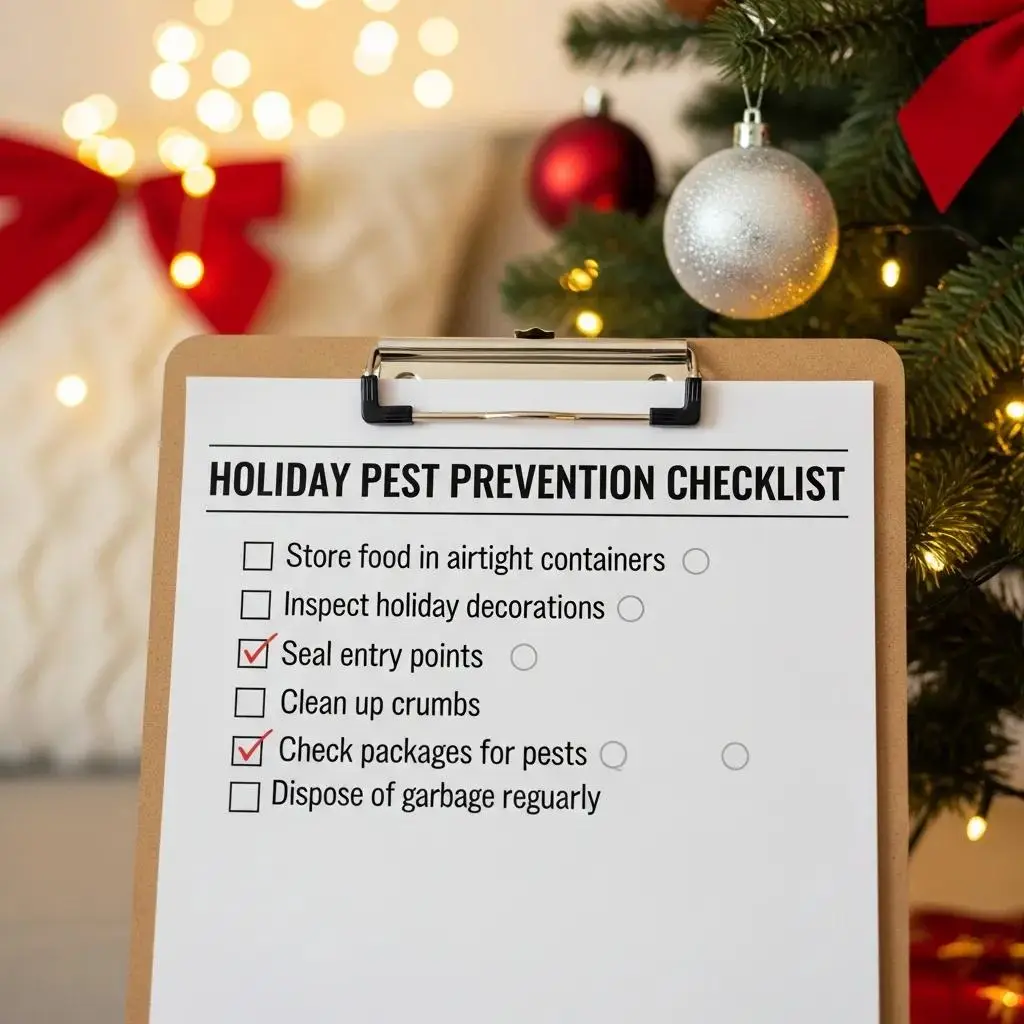
Holiday and winter prevention checklist — quick actions to do now:
- Keep all food in airtight containers and wipe up spills right after events.
- Inspect wreaths, garlands, and firewood before you bring them indoors.
- Seal trash cans and move accumulated garbage away from doors and porches.
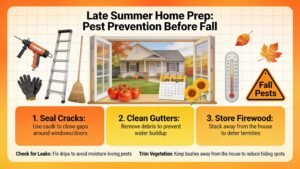
- Stack firewood off the ground and away from the house to reduce hiding spots.
- Fit door sweeps and weatherstripping on exterior doors and cover easy crawlspace vents.
These steps cut off the most common attractants and focus your effort on the busiest pest pathways. Repeat the checklist during the season to make detection easier and to flag areas that may need a professional look.
What are the most common winter and holiday pests in South Florida?
In South Florida, the pests you’re most likely to see in winter include rodents (mice and rats), cockroaches, indoor-foraging ants, spiders, and—less often but importantly—subterranean termites near foundations. Rodents look for warmth and food inside walls and basements, leaving droppings and chew marks. Cockroaches and ants follow moisture and leftover food in kitchens and pantries. Spiders tend to show up where other insects gather. Termites can be quiet but cause serious structural damage; look for mud tubes, hollow-sounding wood, or fresh frass around wood components.
Use these signs to set priorities: any rodent sighting or droppings calls for immediate exclusion and traps; persistent roach or ant activity needs sanitation and possible baiting; signs of wood damage or mud tubes require a prompt termite inspection. Early recognition lets you use targeted fixes instead of broad, costly responses.
Which home entry points and seasonal habits increase pest risk during festive seasons?
Holiday routines and winter conditions create new entry points and behaviors pests exploit. Kitchens and pantries are high risk because of food and packaging. Basements and crawlspaces offer warmth and shelter. Attics can attract nesting animals if insulation is disturbed. Entryways collect packages and footwear that bring outdoor debris inside. Common seasonal habits — leaving doors open for guests, storing boxes in living areas, and bringing in wreaths or firewood — raise exposure, while clutter hides early pest risk.
Quick fixes for each area include:
- Installing door and window sweeps
- Moving firewood away from the foundation
- Sealing gaps around utility penetrations
- Raising stored boxes off the floor so you can check for droppings or nesting
Checking these spots during and after gatherings closes common access points and makes early detection and targeted treatment much easier.
Why is winter a strategic time for termite inspection and treatment?
Winter can be a good time for termite work because subterranean termites often concentrate activity in sheltered zones near foundations. Cold weather tends to compress foraging into smaller, more detectable pathways, so a careful inspection may reveal active mud tubes, localized frass, or moisture channels that point to a nearby colony. When activity is focused, technicians can place bait stations or apply liquid treatments more precisely — increasing the chance of effective control.
To help you choose the right winter treatment, here’s a practical comparison of baiting systems and liquid barriers with winter-specific notes.
| Treatment Approach | How it Works | Winter Pros/Cons |
|---|---|---|
| Termite baiting systems | Perimeter stations with cellulose-based baits that foraging workers feed on and share with the colony | Pros: Targeted and low-impact; effective when termites are actively foraging. Cons: Slower to eliminate a colony and requires ongoing monitoring, especially if activity slows in cold spells. |
| Liquid termite barriers | Trench-and-treat or sub-slab applications that create a treated soil barrier around the structure | Pros: Provides immediate residual protection and faster control near treated areas. Cons: Freeze-thaw soil conditions can affect application timing and long-term performance. |
| Combined program | Baiting for monitoring plus selective liquid treatment where activity is concentrated | Pros: Balances long-term monitoring with quicker perimeter control. Cons: Requires professional planning and coordination. |
What termite behaviors occur in winter and how do treatments work?
Subterranean termites survive winter by staying in soil and insulated voids near moisture and food. They still forage in sheltered bands where warmth and dampness persist. Inspections in winter therefore focus on concentrated pathways — mud tubes on foundation walls, damp spots, or wood in contact with soil — because broader foraging is less common. Treatments either rely on workers taking bait back to the colony (baiting) or on creating a treated soil zone that kills or repels termites crossing it (liquid barrier). Both approaches aim to interrupt feeding and movement.
That behavior-based view helps you decide where to look: check foundation perimeters, crawlspaces, and any wood-to-soil contacts, then match the treatment to what you find — bait when foragers are active, liquid barrier when you need fast perimeter control. A technician can account for soil temperature and structure type to improve winter results.
How do baiting systems and liquid barriers perform in winter?
Baiting systems depend on active worker foraging and food-sharing behavior; in colder ground temperatures bait uptake can slow, so monitoring may take longer but can still reach the colony when activity returns. Liquid barriers create an immediate treated zone that kills or deters termites that contact it, but installers must plan around freeze-thaw cycles that affect soil penetration and movement. Winter service plans and inspection schedules are typically adjusted to those conditions.
- Baiting systems: Best when activity is documented and you prefer a low-environmental-impact approach; expect regular monitoring through winter.
- Liquid barriers: Best for rapid perimeter protection or visible wood-to-soil contact; requires suitable soil conditions for reliable application.
- Combined approach: Often the right choice when structure vulnerability and clear colony evidence coexist.
Choose based on inspection findings, soil and foundation type, and whether you prefer ongoing monitoring or immediate barrier protection.
Research supports the effectiveness of termite baiting systems for controlling active infestations, while their role as a standalone preventive measure remains debated.
Termite Baiting Systems for Prevention and Structural Protection
Studies have shown that colony-elimination baiting systems — such as those using Recruit II (0.5% hexaflumuron) — can control active subterranean termite infestations. Baiting is widely accepted for remedial control in many regions. However, the ability of baiting systems to prevent termite damage over the long term is more contested than their use for active control.
Installation Guidelines for the Basaltic Termite Barrier: A Particle Barrier to Formosan Subterranean Termites (Isoptera: Rhinotermitidae), JK Grace, 2000
What are the essential pest-proofing steps for homes?
Effective winter pest-proofing combines exclusion, moisture control, and routine maintenance to shrink the habitats and entry points pests use. Start by finding foundation cracks, gaps around utilities, and worn door seals, then use durable caulk, expanding foam, or weatherstripping to close those openings. Fix gutters and downspouts so water moves away from the foundation, and use dehumidifiers or ventilation to keep basements and crawlspaces dry — conditions that discourage cockroaches, ants, and mold-loving insects. Reduce clutter and organize storage so you can spot early signs like droppings, chew marks, or frass and act quickly.
Prioritize actions with this entry-point risk checklist:
| Entry Point | Risk Level | DIY Fix | Professional Fix |
|---|---|---|---|
| Foundation cracks | High | Seal with polyurethane caulk or hydraulic cement | Foundation injection, thorough inspection, and targeted soil treatment |
| Door/window gaps | Medium | Install sweeps and weatherstripping | Replace frames or thresholds and re-fit doors |
| Utility penetrations | Medium | Use expanding foam or pest-blocking sealant | Professional sealing and strategic barrier placement |
| Crawlspace vents | High | Install vent screens and insulated covers | Crawlspace encapsulation and moisture remediation |
| Roof/gutter debris | Medium | Clear gutters and repair sagging sections | Roof and gutter repair plus attic inspection |
Sealing cracks, gaps, and entry points to block intrusions
DIY sealing solves many problems, but call a pro for structural issues (rot at the sill plate, large foundation voids) or when work requires access under slabs or behind finished surfaces. Recheck seals after winter weather cycles to catch small failures before they become new entry points.
Attic/basement exclusion and moisture control for winter protection
Attics and basements are common nesting and transit zones because they offer shelter, steady temperatures, and moisture — all attractive in winter. For attics, seal roofline gaps, ensure insulation is continuous (no open voids for nesting), and screen soffits and gable vents to block animal entry. In basements, seal rim joists, repair leaks, install a vapor barrier, and keep the space dry to reduce cockroach and ant activity.
Moisture control removes the conditions many pests need. Use dehumidifiers where needed, fix condensate and gutter problems, and slope soil away from foundations. If DIY steps reveal structural moisture or repeated animal entries, professional remediation or insulation upgrades will make exclusion durable and support your seasonal pest-control plan.
How does Bugsy’s eco-friendly and local approach protect South Florida homes?
Bugsy Pest Control Inc. combines local knowledge with eco-conscious methods to protect homes across South Florida. As a locally owned provider, Bugsy focuses on safe products, responsive service, and practical exclusion work. They offer 24/7 availability for urgent incidents and back their work with a 100% satisfaction guarantee. Their maintenance plans — offered in Silver, Gold, and Platinum tiers — let homeowners pair routine exclusion and monitoring with professional treatments; they also include a free termite inspection when you purchase a qualifying plan, simplifying ongoing protection.
A comparison of Bugsy’s service plans shows what each tier typically covers and the key homeowner benefits:
| Plan | Covers (pests) | Key Benefits | Offer |
|---|---|---|---|
| Silver | Common seasonal pests (ants, roaches, rodents) | Basic maintenance visits and preventive checks | Entry-level maintenance plan |
| Gold | Expanded coverage including wildlife exclusion and targeted treatments | More frequent service visits and priority scheduling | Mid-tier plan with enhanced services |
| Platinum | Comprehensive protection including termite monitoring and advanced exclusion | Fastest response, priority service, and the most thorough coverage | Includes free termite inspection with plan purchase |
Local expertise, 24/7 availability, and a 100% satisfaction guarantee
Local experience matters: South Florida microclimates, housing types, and seasonal pest patterns vary between cities and suburbs. Technicians who know local construction and common problem areas find likely entry points faster and recommend targeted fixes. Bugsy’s round-the-clock availability helps with urgent holiday problems — sudden rodent intrusions or discovered termite activity — letting homeowners limit damage and disruption quickly. Their 100% satisfaction guarantee also means follow-up work will be handled promptly if initial treatments don’t meet expectations.
Always confirm a provider is licensed and insured, and ask about follow-up policies and response times. Local firms that combine inspection, exclusion, and eco-conscious treatments usually deliver the most reliable seasonal protection.
Eco-friendly, pet-safe products used in winter pest control
Eco-friendly winter pest control emphasizes targeted baits, spot treatments, physical exclusion, and reduced-use chemicals to lower exposure for people and pets while still solving pest problems. Common methods include monitored bait stations, targeted gel or granular baits, and exclusion materials that reduce the need for broad residual sprays. Technicians use safety practices like clear re-entry times, occupant notifications, and restricted access to treated areas so family gatherings aren’t interrupted unnecessarily.
Because winter conditions change how pests forage, pros choose products and application methods that remain effective at lower temperatures and in tighter foraging zones. If you have questions, ask for product labels, safety data, and recommended re-entry windows so you can plan events and occupancy around safe treatment timing.
When should homeowners schedule professional inspections and how to get a free estimate?
Schedule a professional inspection when you see persistent pest activity, signs of structural damage, or when you want proactive termite protection before a sale or renovation. Call if you find droppings, chew marks, mud tubes, visible frass, hollow-sounding wood, or multiple guests report pest sightings during visits. An early professional check can uncover hidden vulnerabilities — foundation soil channels, compromised sill plates, or attic penetrations — that DIY steps may miss and which can worsen through freeze-thaw cycles.
Decision checklist — when to call a pro this season:
- Immediate inspection: Visible termite tubes, soft or damaged structural wood, or active rodent nesting inside walls.
- Prompt scheduling: Repeat sightings of cockroaches, ants, or rodents despite good sanitation.
- Proactive inspection: Before renovations or a real estate transaction, or if you want seasonal monitoring under a maintenance plan.
Use this list to judge urgency and to decide when a free professional assessment is the most cost-effective next step.
Signs you need a professional inspection this season
Clear signs that call for a professional inspection include mud tubes on foundations, crumbling or chewed wood, regular droppings in hidden spots, and repeated daytime sightings of pests that are normally nocturnal — all signs of heavy infestations. Termite-specific red flags are sawdust-like frass, hollow-sounding beams, or tiny holes in wooden elements — these should prompt immediate scheduling because delays increase repair costs. For rodents, watch for gnawed wiring or displaced insulation in attics and basements, which create safety and fire risks beyond nuisance concerns.
If you spot these indicators, act quickly: call for an inspection to determine scope, get an evidence-based treatment plan, and decide whether exclusion or active treatment is the priority. Early professional work often prevents more extensive structural damage and lowers overall costs.
How to request a free termite inspection or pest inspection and home maintenance plan
To request a free termite inspection with a qualifying maintenance plan purchase, or to book a general pest inspection, have your property address, a short description of recent sightings or damage, and photos if possible. Many local companies — including Bugsy Pest Control Inc. — provide online request forms and scheduling options; note any timing constraints tied to holiday events when you book. During the visit, the technician will inspect foundation perimeters, crawlspaces, attics, and visible structural areas, then deliver a written estimate and recommend the Silver, Gold, or Platinum maintenance tier that fits your needs.
After the inspection you’ll typically receive a written estimate, suggested exclusion work or treatment steps, and scheduled follow-up visits if you choose a maintenance plan. The free termite inspection offer applies when a homeowner purchases a qualifying plan, making it easy to combine an initial assessment with ongoing protection.
Frequently Asked Questions
What are the signs of a pest infestation during the winter months?
Common winter signs include droppings, gnaw marks, and odd noises in walls or ceilings. Look for small, dark droppings near food or entry points for rodents; egg cases or shed skins from roaches; and mud tubes or frass that resemble sawdust for termites. If you spot any of these, act quickly and consider a professional inspection to assess the issue.
How can I tell if my home is at risk for termite damage?
Check for mud tubes on foundation walls, hollow-sounding wood, small holes in wood, and any persistent moisture problems — termites prefer damp conditions. Regular inspections, especially in areas with known termite activity, help find vulnerabilities early. If you suspect risk, schedule a professional termite inspection for a full evaluation and prevention options.
What should I do if I find a pest during the holidays?
Stay calm and take immediate, practical steps. Identify the pest if you can, remove or isolate exposed food, and use traps or baits for minor sightings. If you see signs of infestation or structural damage, contact a pest professional for a thorough inspection and treatment plan. Quick action protects your home and keeps celebrations on track.
Are there eco-friendly pest control options available?
Yes. Eco-friendly options include targeted baiting, physical exclusion, and reduced-use chemical treatments designed to minimize exposure for people, pets, and the environment. When comparing services, ask about product labels, safety data, and how treatments will be applied so you can choose the safest effective approach for your home.
How often should I schedule pest inspections during the winter?
At minimum, schedule an inspection once per season, with more frequent visits if you’ve had previous problems or see ongoing activity. Consider an inspection before major events, renovations, or real estate transactions. Regular checks catch issues early and keep your pest control approach proactive.
What are the benefits of a maintenance plan for pest control?
A maintenance plan provides regular inspections, preventive treatments, and priority response for emergencies. Plans help spot and address small problems before they escalate, saving time and money. Many plans also include free termite inspections and streamlined follow-up visits, giving homeowners greater peace of mind year-round.